
Dolphin/Dolphins

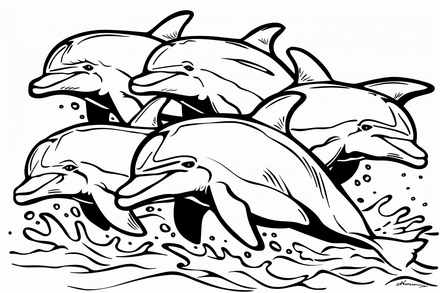
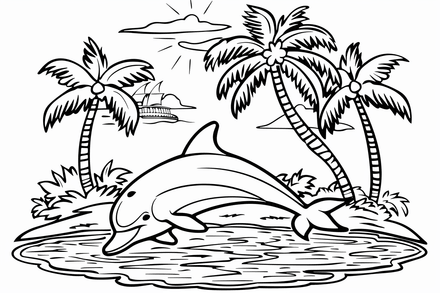
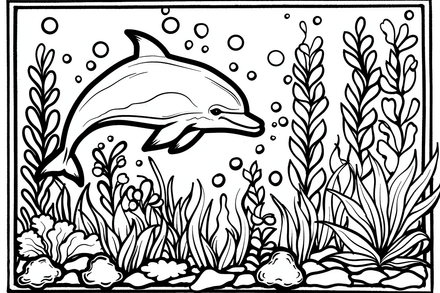
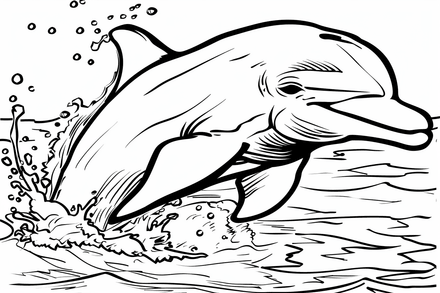
Dolphins are intelligent marine mammals belonging to the family *Delphinidae*, with the bottlenose dolphin (*Tursiops truncatus*) being one of the most well-known species. A single animal is called a **dolphin**, while a group is commonly referred to as a **pod**—a term that reflects their highly social nature. The male is known as a **bull**, the female as a **cow**, and the young are called **calves**. Dolphins are renowned for their streamlined bodies, conical snouts (rostrums), curved dorsal fins, and powerful tail flukes that propel them through water at speeds up to 20 miles per hour. They possess a thick layer of blubber for insulation, breathe air through a blowhole on top of their heads, and use echolocation—emitting high-frequency clicks and interpreting the echoes—to navigate and hunt in dark or murky waters. Their large brains and complex neural structures support advanced problem-solving, self-awareness (as demonstrated by mirror tests), and intricate communication through whistles, squeaks, and body language. Most dolphins have between 80 and 100 sharp teeth used for grasping fish and squid, which they swallow whole.
Dolphins inhabit oceans and coastal waters worldwide, from tropical and temperate seas to some freshwater rivers. The common bottlenose dolphin thrives in warm coastal areas, including the Atlantic, Pacific, and Indian Oceans, often seen near shorelines, bays, and estuaries. Other species, like the orca (*Orcinus orca*—technically the largest dolphin), range from polar regions to the equator. The Amazon river dolphin (*Inia geoffrensis*) lives in freshwater river systems of South America, while the critically endangered Maui’s dolphin (*Cephalorhynchus hectori maui*) is restricted to a small stretch of New Zealand’s coastline. There are over 40 dolphin species, many with distinct subspecies or ecotypes adapted to local environments. For example, resident and transient killer whales differ in diet, behavior, and vocalizations—residents eat fish, while transients hunt marine mammals. Similarly, bottlenose dolphins have offshore and coastal forms with differing sizes and social structures. These variations highlight the adaptability and evolutionary diversity within the dolphin family.
Culturally, dolphins hold a special place in human history and imagination. Revered in ancient Greece as symbols of protection and guidance, they were associated with gods like Poseidon and Apollo. In modern times, dolphins are celebrated for their intelligence, playfulness, and apparent empathy toward humans—frequently depicted in films, literature, and marine parks. Some Indigenous cultures view them as spiritual messengers or ancestral beings. Ecologically, dolphins play a vital role as mid-to-top-level predators, helping regulate populations of fish and squid and maintaining balance in marine food webs. Their presence often indicates a healthy ocean ecosystem. By preying on weaker or sick individuals, they contribute to stronger prey populations. Additionally, their movements and feeding behaviors can influence nutrient distribution in the water column. However, dolphins face serious threats from pollution, entanglement in fishing gear, habitat degradation, and noise pollution that disrupts their echolocation. Species like the vaquita and Yangtze finless porpoise are on the brink of extinction. Conservation efforts focus on protected marine areas, responsible fishing practices, and public education. As both ecological stewards and beloved icons of the sea, dolphins continue to inspire wonder and a deeper commitment to ocean conservation.
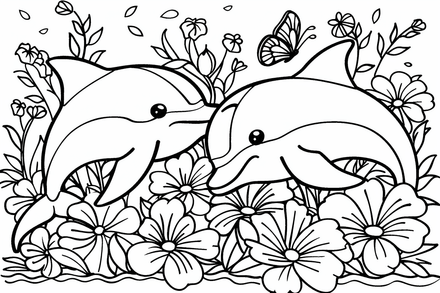
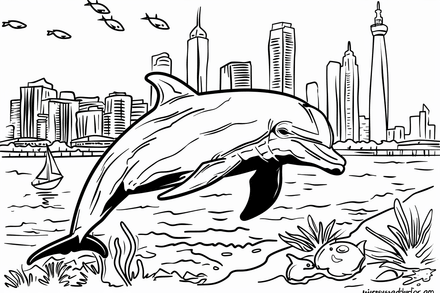
We keep adding images as will as print-on-demand products of dolphins as time goes on. The easiest way to keep up-to-date is to subscribe to our newsletter.
If you would like them applied to a particular kind of clothing item which is missing, then please contact us!
Simba Stickers Sea Creature Facts Videos in English
For facts about sea creatures presented in a fun and informative way, kindly have a look at our videos below!
Video Shorts
Regular Videos
We also have sea creature videos available in French (regular/shorts), German (regular/shorts), Italian (regular/shorts) and Latin (regular/shorts).
Go to the Simba Stickers English channel for all our videos!
Dolphin Products - digital/print-on-demand

Subscribe to our newsletter
Get the latest news and updates straight to your inbox