
Hippopotamus/Hippopotami/Hippopotamuses

The hippopotamus (*Hippopotamus amphibius*) is a large, semi-aquatic mammal native to sub-Saharan Africa and one of the most formidable animals on the continent. While only one living species exists today, there are two recognized subspecies: the common hippopotamus (*Hippopotamus amphibius amphibius*) and the smaller, rarer pygmy hippopotamus (*Choeropsis liberiensis*), which is actually a separate species and not a true subspecies of the common hippo. The pygmy hippo, found in the forested swamps of West Africa—primarily in Liberia, with smaller populations in Sierra Leone, Guinea, and Ivory Coast—is much smaller (weighing 400–600 lbs or 180–275 kg), more solitary, and less aquatic than its larger relative. The common hippopotamus, by contrast, lives in large groups called pods or bloats, typically consisting of females and their young led by a dominant male. Adults can weigh between 3,000 to 4,500 pounds (1,360 to 2,040 kg), with males significantly larger than females. They are easily recognized by their enormous mouths, which can open nearly 180 degrees to reveal large canine tusks used for defense, and their thick grayish skin that secretes a reddish oily substance—often called "blood sweat"—that acts as a natural sunscreen and antibiotic.
Hippos inhabit a variety of freshwater ecosystems, including slow-moving rivers, lakes, swamps, and estuaries, where water is deep enough to support their weight and provide refuge from the intense African sun. They are highly dependent on water, rarely venturing far from it, and are found across East, Central, and Southern Africa, including Kenya, Tanzania, Uganda, Zambia, and South Africa. A single hippo can consume up to 80 pounds (35 kg) of grass each night during its foraging trips, traveling up to six miles (10 km) from water sources. Though herbivorous, they play a surprisingly influential role in their ecosystems. Their grazing shapes grassland structure, and their well-worn paths to water create channels that influence water flow and provide access for other animals. In aquatic environments, their dung enriches the water with nutrients, supporting fish and invertebrate populations—though excessive concentrations in isolated pools can lead to oxygen depletion and harm aquatic life.
Culturally, the hippopotamus holds a unique place in African traditions and global imagination. In ancient Egypt, the hippo was both feared and revered; the goddess Taweret, depicted with a hippo’s body, was a protector of childbirth and fertility. Despite their seemingly docile appearance, hippos are considered one of the most dangerous animals in Africa, responsible for more human fatalities each year than many large predators due to their territorial aggression. Today, the common hippopotamus is classified as **Vulnerable** by the International Union for Conservation of Nature (IUCN), with an estimated population of 115,000 to 130,000 individuals—down from higher numbers in previous decades due to habitat loss, poaching for ivory (from their canine tusks), and human-wildlife conflict. The pygmy hippopotamus is classified as **Endangered**, with fewer than 2,000 mature individuals remaining in the wild, threatened by deforestation and hunting. Conservation efforts for both species focus on protecting wetland habitats, strengthening anti-poaching measures, and promoting coexistence with local communities. As key indicators of healthy freshwater systems, hippos—both common and pygmy—play vital ecological roles and deserve urgent attention to ensure their survival.
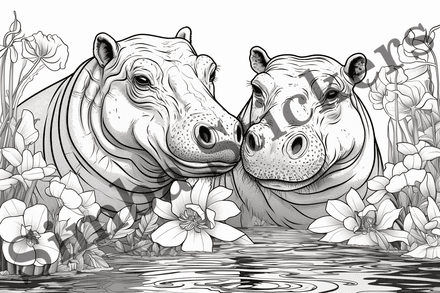
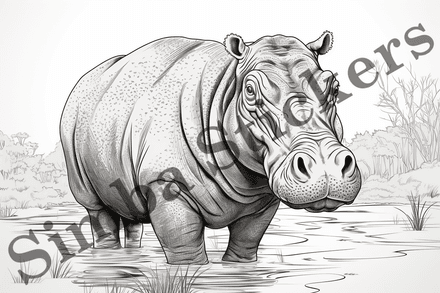
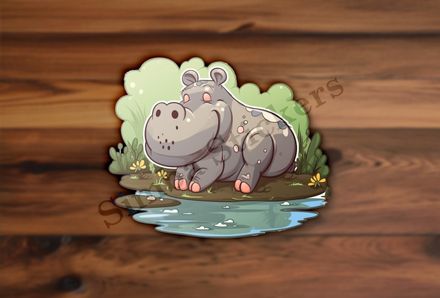
We keep adding images as will as print-on-demand products of hippos as time goes on. The easiest way to keep up-to-date is to subscribe to our newsletter.
If you would like them applied to a particular kind of clothing item which is missing, then please contact us!
Simba Stickers African Savanna Facts Videos in English
For facts about animals of the African Savanna presented in a fun and informative way, kindly have a look at our videos below!
Video Shorts
Regular Videos
We also have African Savanna animal videos available in French (regular/shorts), German (regular/shorts), Italian (regular/shorts) and Latin (regular/shorts).
Go to the Simba Stickers English channel for all our videos!
Hippo Products - digital/print-on-demand




Subscribe to our newsletter
Get the latest news and updates straight to your inbox