
Chimpanzee/Chimpanzees
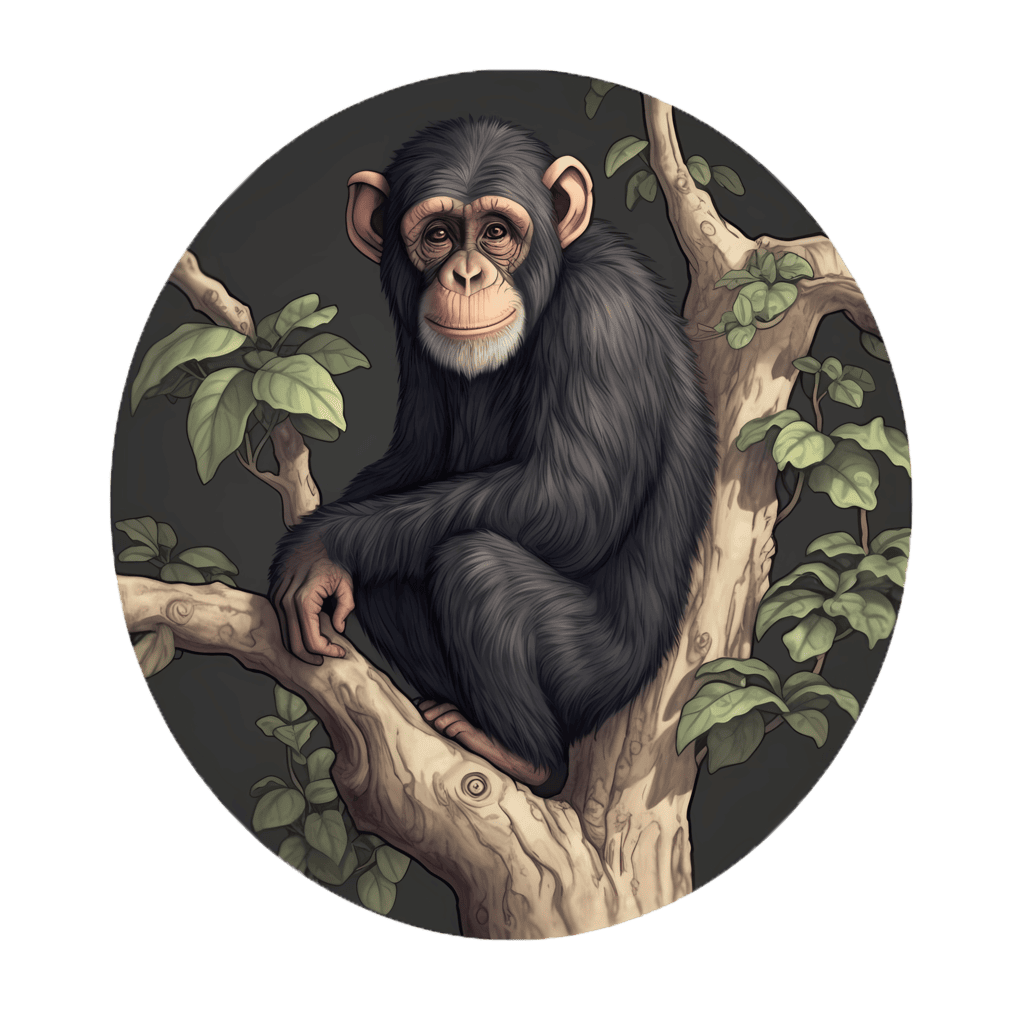
Chimpanzees (*Pan troglodytes*) are one of humans’ closest living relatives, sharing approximately 98.6% of our DNA. A single animal is called a **chimpanzee** or **chimp**, while a group is typically referred to as a **troop** or **community**, reflecting their complex social structure. Males and females do not have distinct common names beyond "male" or "female," though dominant males may be recognized by status within the group. The young are called **infants**, remaining dependent on their mothers for several years, nursing and riding on her back as they learn essential survival and social skills. Chimpanzees are highly intelligent primates with long arms adapted for brachiation (arm-swinging), opposable thumbs, and flexible hands and feet that allow them to grasp objects and climb with ease. They lack tails, have dark hair covering most of their bodies, and display expressive faces with bare skin on their hands, feet, and faces. Known for their advanced cognitive abilities, chimpanzees use tools—such as sticks to fish for termites or stones to crack nuts—and exhibit problem-solving skills, self-awareness (passing mirror tests), and emotional depth, including empathy, grief, and cooperation.
Chimpanzees inhabit the tropical forests, woodlands, and savanna mosaics of West and Central Africa, ranging from Senegal in the west to Tanzania in the east. They rely on trees for food, shelter, and nesting—building new sleeping nests each night from branches and leaves. There are four recognized subspecies: the **central chimpanzee** (*Pan troglodytes troglodytes*), found in countries like Gabon and Cameroon; the **eastern chimpanzee** (*P. t. schweinfurthii*), inhabiting the Democratic Republic of the Congo and Uganda; the **Nigeria-Cameroon chimpanzee** (*P. t. ellioti*), the rarest subspecies; and the **western chimpanzee** (*P. t. verus*), which lives in more open habitats and shows unique cultural behaviors such as using spears to hunt small mammals. These subspecies vary slightly in size, coloration, and behavior, shaped by regional environments and isolation. While not "breeds" in any domestic sense, chimpanzee communities develop distinct traditions—like grooming techniques or tool use—that are passed down through generations, demonstrating cultural transmission once thought unique to humans.
Culturally, chimpanzees hold a profound place in science and society. Pioneering researchers like Jane Goodall revolutionized our understanding of primate behavior by observing wild chimpanzees in Tanzania, revealing their capacity for warfare, alliance-building, and compassion. In conservation and education, chimpanzees serve as ambassadors for wildlife protection, symbolizing both the intelligence of animals and the ethical responsibilities humans have toward them. Ecologically, they play a vital role as seed dispersers. By consuming fruits and traveling across large territories, they help regenerate forests and maintain plant diversity, supporting broader biodiversity. Their presence indicates a healthy ecosystem with intact forest cover and low human disturbance. However, all chimpanzee subspecies are classified as **Endangered** by the IUCN due to habitat loss from logging and agriculture, poaching for bushmeat, and the illegal pet trade. Diseases like Ebola have also devastated populations. Conservation efforts focus on protected reserves, anti-poaching initiatives, and community-based programs that promote coexistence. As intelligent, social, and endangered beings, chimpanzees remind us of our deep connection to the natural world—and the urgent need to protect it.
We keep adding images as will as print-on-demand products of baboons as time goes on. The easiest way to keep up-to-date is to subscribe to our newsletter.
If you would like them applied to a particular kind of clothing item which is missing, then please contact us!
Simba Stickers Ape Facts Videos in English
For facts about apes presented in a fun and informative way, kindly have a look at our videos below!
Video Shorts
Regular Videos
We also have ape videos available in French (regular/shorts), German (regular/shorts), Italian (regular/shorts) and Latin (regular/shorts).
Go to the Simba Stickers English channel for all our videos!
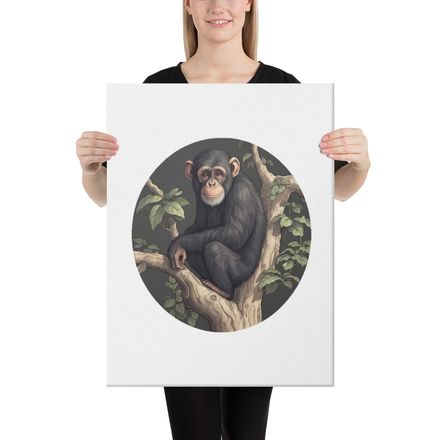
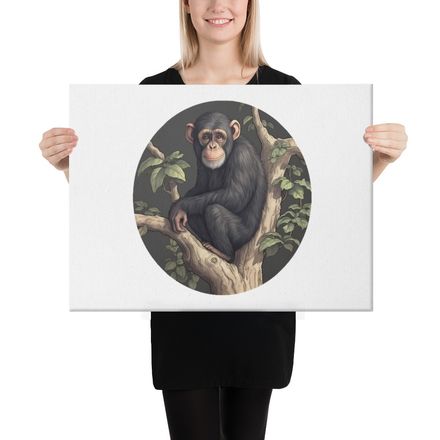
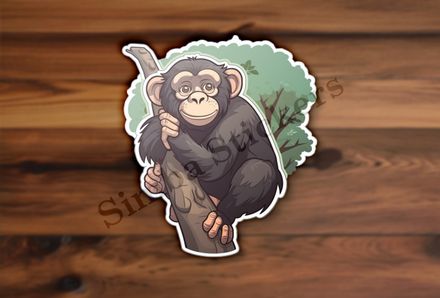
Chimpanzee Products - digital/print-on-demand






Subscribe to our newsletter
Get the latest news and updates straight to your inbox