
Porcupine/Porcupines

Porcupines are large rodents known for their unmistakable defense system of sharp, barbed quills. They belong to two distinct families: the **Old World porcupines** (family *Hystricidae*) found in Africa, Europe, and Asia, and the **New World porcupines** (family *Erethizontidae*) native to the Americas. A single animal is called a **porcupine**, while a group is referred to as a **prickle**—a rare but fitting collective noun, as porcupines are mostly solitary except during mating or when a mother is raising young. The male is known as a **boar**, the female as a **sow**, and the young are called **porcupettes**—a distinctive name that reflects their small, quill-covered appearance at birth. Porcupettes are born with soft quills that harden within hours, allowing them to defend themselves almost immediately. Porcupines are slow-moving, nocturnal animals with stocky bodies, short legs, and long tails (especially in tree-dwelling species). Their most notable feature is their coat of thousands of hollow, keratin-based quills that detach easily upon contact, embedding into predators’ skin and deterring attacks. Contrary to myth, porcupines cannot "shoot" their quills, but they can lash their tails to drive them into threats.
Porcupines inhabit a wide range of environments across continents. The North American porcupine (*Erethizon dorsatum*) lives in forests, tundra, and rocky terrain from Canada to Mexico, often climbing trees to feed on bark, leaves, and conifer needles. It is one of the few rodents capable of surviving harsh northern winters. The prehensile-tailed porcupine (*Coendou* spp.) of Central and South America is arboreal, using its gripping tail to navigate rainforest canopies. In Africa, the crested porcupine (*Hystrix cristata*) occupies savannas, grasslands, and rocky hills, while the Indian crested porcupine (*Hystrix indica*) ranges across South Asia. While not domesticated or bred into varieties like livestock, several **species and subspecies** exist, differing in size, quill patterns, and habitat preferences. For example, the Malayan porcupine (*Hystrix brachyura*) has shorter quills and a broader range than its African relatives. These adaptations reflect evolutionary responses to regional climates and predators. Most porcupines are herbivorous, feeding on roots, tubers, bark, fruits, and crops, and play a role in shaping vegetation through their gnawing and foraging habits.
Culturally, porcupines have inspired both caution and admiration. In Native American folklore, the porcupine is often portrayed as a wise, patient creature that relies on calm defense rather than aggression. Some tribes used porcupine quills in intricate decorative art—a practice known as quillwork—dyeing and weaving them into clothing, bags, and ceremonial items. In parts of Africa and Asia, porcupines are hunted for food and traditional medicine, though this has led to population declines in certain areas. Ecologically, porcupines serve important roles despite their reputation as pests. By gnawing on bark and fallen wood, they help recycle nutrients and create openings in forests that allow new plant growth. Their burrows provide shelter for other animals, and their feeding habits can influence tree composition and forest regeneration. However, they sometimes damage trees, utility poles, and vehicle wiring—leading to conflict with humans. Though not currently endangered, some species face threats from habitat loss and road mortality. Protected in many regions, porcupines remain quiet but vital contributors to ecosystem health. Revered for their resilience and unique defense strategy, they stand as nature’s gentle armored guardians—unassuming, well-protected, and ecologically essential.
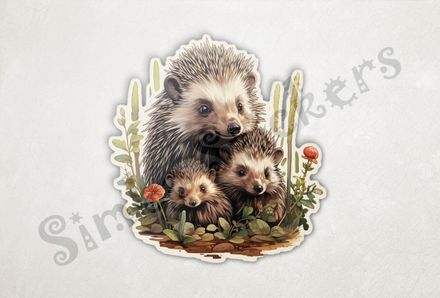
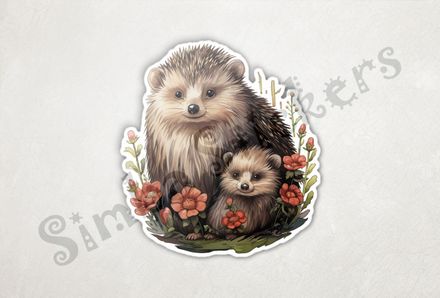
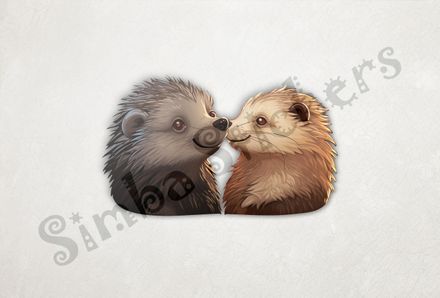
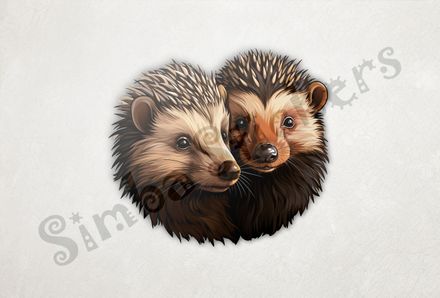
We keep adding images as will as print-on-demand products of porcupines as time goes on. The easiest way to keep up-to-date is to subscribe to our newsletter.
If you would like them applied to a particular kind of clothing item which is missing, then please contact us!
Simba Stickers Rodent Facts Videos in English
For facts about rodents presented in a fun and informative way, kindly have a look at our videos below!
Video Shorts
Regular Videos
We also have rodent videos available in French (regular/shorts), German (regular/shorts), Italian (regular/shorts) and Latin (regular/shorts).
Go to the Simba Stickers English channel for all our videos!
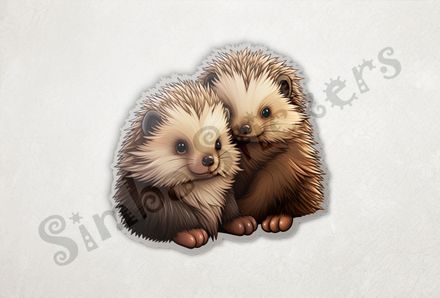
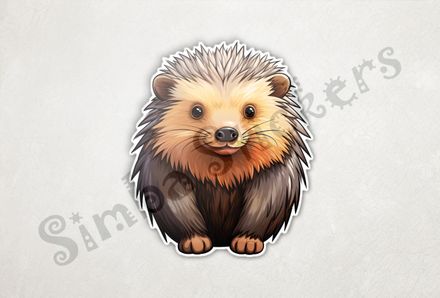
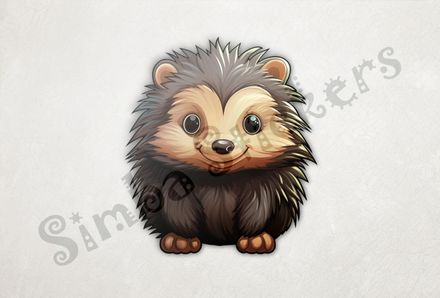
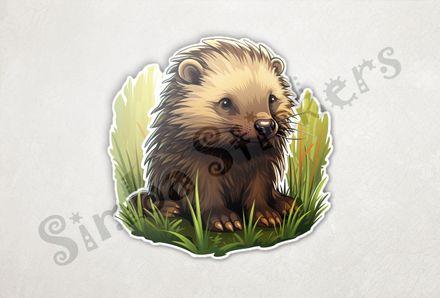
Porcupine Products - digital/print-on-demand




Subscribe to our newsletter
Get the latest news and updates straight to your inbox