
Ape/Apes
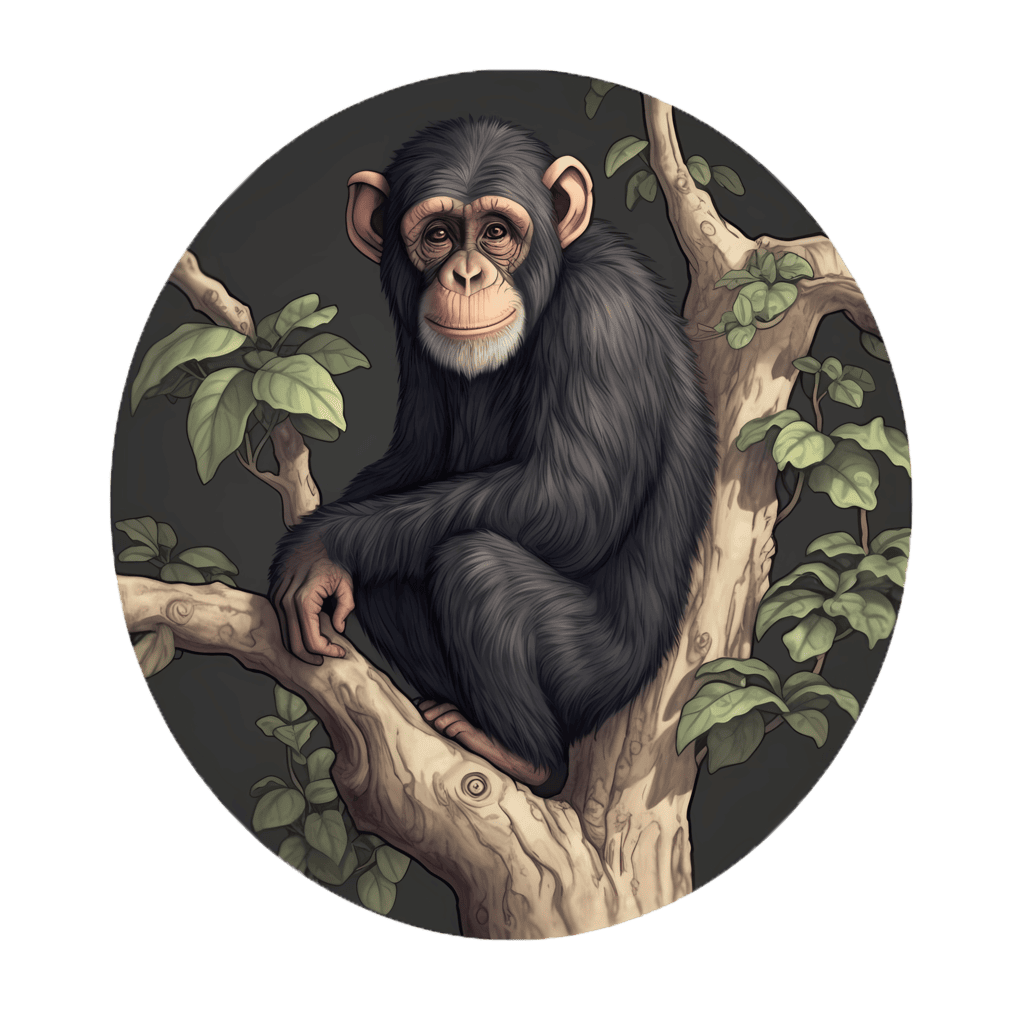
Apes are large, tailless primates belonging to the superfamily *Hominoidea*, which includes two main families: *Hominidae* (great apes) and *Hylobatidae* (gibbons or lesser apes). The great apes consist of gorillas (*Gorilla*), chimpanzees (*Pan troglodytes*), bonobos (*Pan paniscus*), orangutans (*Pongo*), and humans (*Homo sapiens*), while gibbons include several species across Southeast Asia. A single animal is called an **ape**, while a group may be referred to as a **troop**, **shrewdness**, or simply a **group** of apes—though social structure varies by species. Male and female apes do not have unique common names beyond "male" or "female," though in informal or zoo settings, terms like **silverback** (for dominant male gorillas) are used. Young apes are universally called **infants**, reflecting their long developmental period and close maternal care. Apes are distinguished from monkeys by their lack of tails, larger brains relative to body size, broader chests, and highly developed cognitive abilities. They possess opposable thumbs, flexible shoulder joints for brachiation (arm-swinging in gibbons and orangutans), and complex facial expressions that support advanced communication. Their intelligence is evident in tool use (especially among chimpanzees), self-awareness (demonstrated in mirror tests), and intricate social bonds.
Apes inhabit tropical and subtropical forests across Africa and Asia. Gorillas live in the dense rainforests and highland bamboo forests of central Africa, with the eastern and western gorilla species (*Gorilla beringei* and *Gorilla gorilla*) each having distinct subspecies adapted to different elevations and climates. Chimpanzees occupy West and Central African woodlands and savanna mosaics, while bonobos are found only south of the Congo River in the Democratic Republic of the Congo. Orangutans (*Pongo pygmaeus*, *Pongo abelii*, and *Pongo tapanuliensis*) dwell in the swampy and peat forests of Borneo and Sumatra, leading largely solitary lives compared to other apes. Gibbons, the smallest apes, swing through the canopy of Southeast Asian forests in monogamous family units. Each ape species has evolved unique adaptations: gorillas are powerful vegetarians with massive jaw muscles; chimpanzees are omnivorous and highly social, forming shifting alliances; bonobos resolve conflict through social bonding and sexuality; and orangutans are masters of forest navigation, building nests nightly in the treetops. These behavioral and physical distinctions highlight the diversity within the ape family despite shared ancestry.
Ecologically, apes play vital roles in their ecosystems, particularly as seed dispersers. By consuming fruits and traveling long distances, they help regenerate forests and maintain plant diversity. Orangutans, for example, are known as “gardeners of the forest” for their role in spreading seeds of large hardwood trees. Gorillas and chimpanzees also disperse seeds through their droppings, supporting forest resilience. Their feeding habits influence vegetation structure, and their presence often indicates a healthy, biodiverse habitat. As apex herbivores and omnivores, they are also part of complex food webs, though adult apes have few natural predators aside from leopards and humans. However, due to their slow reproductive rates—females give birth to one infant every 4–8 years—populations recover slowly from losses. This makes them especially vulnerable to environmental disruption.
Culturally, apes hold a profound place in human consciousness, symbolizing both our closest relatives in the animal kingdom and the boundary between humanity and nature. In scientific study, they have revolutionized our understanding of cognition, emotion, and social behavior. In media and literature, apes appear as symbols of strength, wisdom, or rebellion—from King Kong to Caesar in *Planet of the Apes*. Indigenous communities in Africa and Asia often view apes with reverence or caution, sometimes incorporating them into oral traditions. Yet, all ape species face severe threats: habitat destruction from logging, agriculture, and mining; poaching for bushmeat and the illegal pet trade; and diseases like Ebola, which has devastated gorilla populations. All great apes are classified as **Endangered** or **Critically Endangered** by the IUCN. Conservation efforts focus on protected reserves, anti-poaching patrols, and community-based education. Protecting apes means preserving not only keystone species but also a living reflection of our evolutionary past—and a reminder of our responsibility to safeguard the natural world.
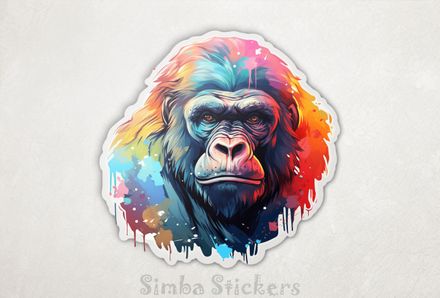
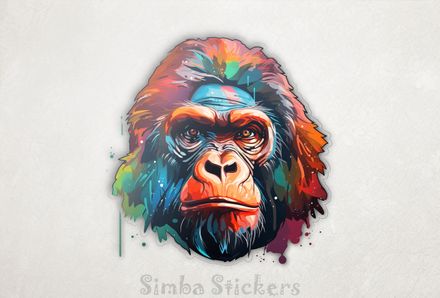
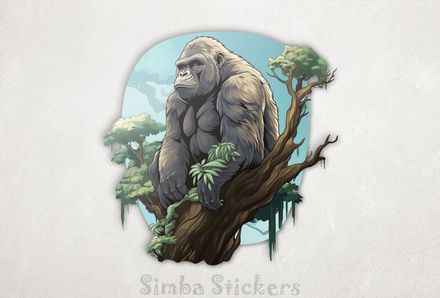
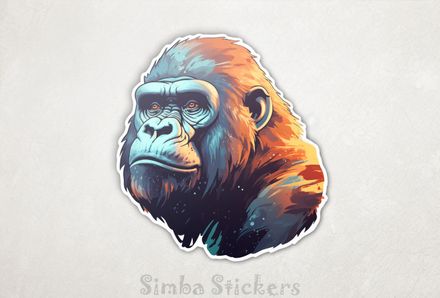
We keep adding images as will as print-on-demand products of apes as time goes on. The easiest way to keep up-to-date is to subscribe to our newsletter.
If you would like them applied to a particular kind of clothing item which is missing, then please contact us!
Simba Stickers Ape Facts Videos in English
For facts about apes presented in a fun and informative way, kindly have a look at our videos below!
Video Shorts
Regular Videos
We also have ape videos available in French (regular/shorts), German (regular/shorts), Italian (regular/shorts) and Latin (regular/shorts).
Go to the Simba Stickers English channel for all our videos!





























Subscribe to our newsletter
Get the latest news and updates straight to your inbox