
Eagle/Eagles
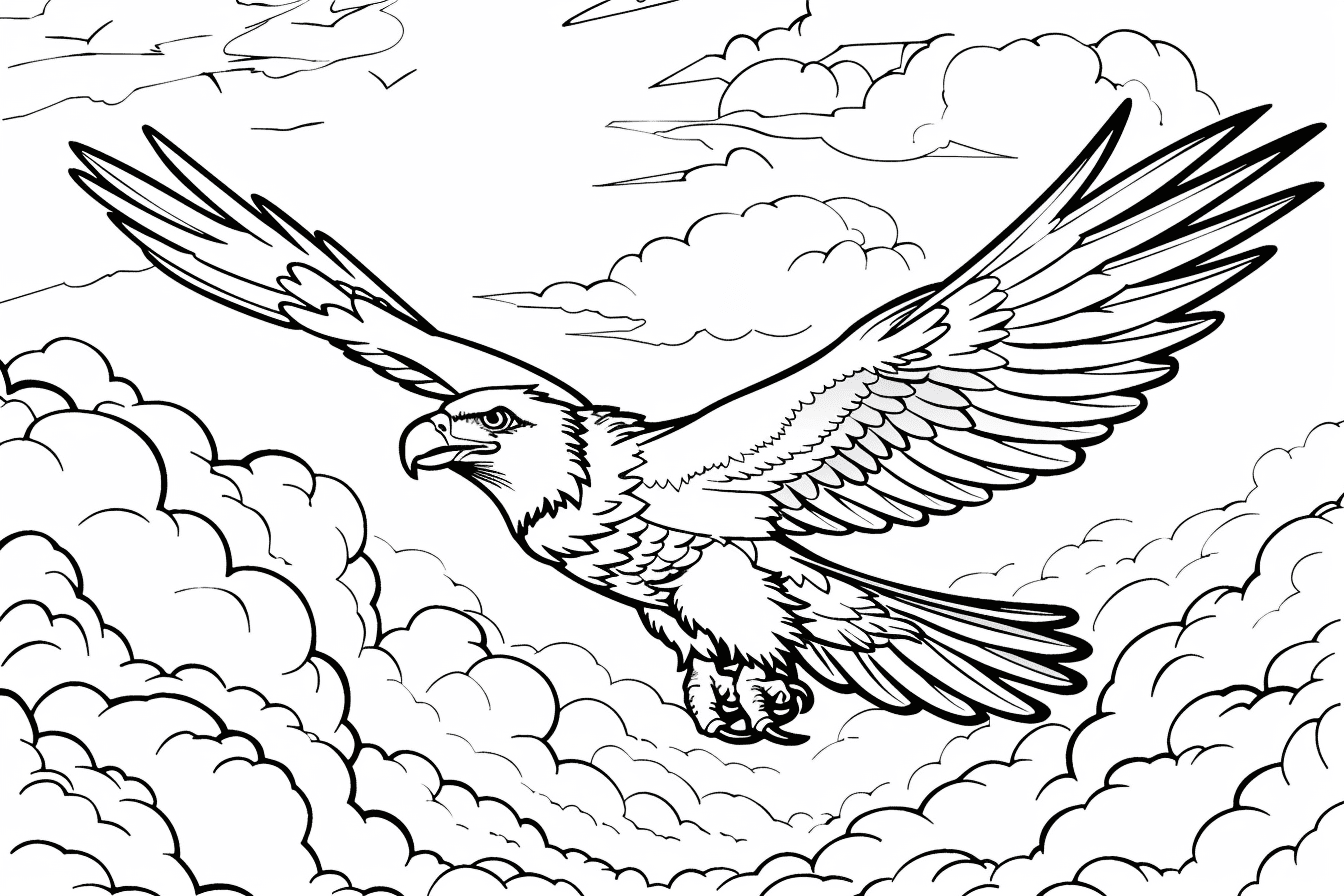
Eagles are powerful birds of prey belonging to the family *Accipitridae*, with many species classified under genera such as *Aquila*, *Haliaeetus*, and *Harpyia*. Notable examples include the bald eagle (*Haliaeetus leucocephalus*), golden eagle (*Aquila chrysaetos*), and harpy eagle (*Harpia harpyja*). A single bird is called an **eagle**, while a group can be referred to as a **flock**, **aerie** (when nesting), or more poetically, a **convocation** of eagles. The male is known as a **boar**, though this term is rarely used; most simply refer to them as male eagles. The female, often larger than the male, is called a **hen** or female eagle. Young eagles are called **eaglets**, a distinctive name that reflects their status as developing raptors. Eagles are renowned for their impressive physical traits: strong, hooked beaks for tearing flesh, massive talons capable of gripping prey with great force, keen eyesight—up to eight times sharper than human vision—and broad wingspans that allow for soaring flight on thermal currents. Most species have dark brown plumage with contrasting markings, such as the white head and tail of the mature bald eagle.
Eagles inhabit diverse environments across every continent except Antarctica. They thrive in areas offering high vantage points for nesting and abundant prey, including mountains, forests, wetlands, coastlines, and open plains. The bald eagle is found near lakes, rivers, and coastal regions across North America, where it feeds primarily on fish. The golden eagle inhabits rugged terrain from North America to Eurasia, hunting small mammals like rabbits and ground squirrels. The crowned eagle (*Stephanoaetus coronatus*) prowls African rainforests, while the Philippine eagle (*Pithecophaga jefferyi*), one of the rarest and largest eagles, resides in the tropical forests of the Philippines. Many eagle species have recognized **subspecies** adapted to regional conditions—such as the southern bald eagle (*Haliaeetus leucocephalus leucocephalus*) and northern bald eagle (*Haliaeetus leucocephalus washingtoniensis*), which differ slightly in size and range. Similarly, the golden eagle has numerous subspecies across the Northern Hemisphere, varying in coloration and body size. These distinctions reflect adaptations to climate, altitude, and food availability, underscoring the evolutionary flexibility within the group.
Culturally, eagles hold a revered place in human history, symbolizing strength, freedom, and divine power across civilizations. The bald eagle is the national bird of the United States, appearing on seals, currency, and military insignia as a symbol of independence and authority. In ancient Rome, the eagle represented Jupiter and was carried into battle as a standard. Among many Indigenous peoples of North America, the eagle is sacred—its feathers used in ceremonies, prayer, and regalia, believed to carry messages to the Creator. In Norse mythology, an eagle sits atop the world tree Yggdrasil, representing wisdom and cosmic insight. Ecologically, eagles play a vital role as apex predators, helping regulate populations of fish, mammals, and birds, thus maintaining balance within ecosystems. By removing weak or sick animals, they contribute to healthier prey populations. Their presence often indicates a robust environment with clean water and abundant wildlife. However, many eagle species face threats from habitat destruction, lead poisoning (from ingesting bullet fragments in carcasses), electrocution, and illegal hunting. The Philippine and Spanish imperial eagles are critically endangered, while others, like the bald eagle, have made remarkable recoveries thanks to conservation efforts. As both ecological guardians and enduring cultural icons, eagles remain majestic symbols of the wild—a testament to nature’s power and the importance of protecting it.
We keep adding images as will as print-on-demand products of eagles as time goes on. The easiest way to keep up-to-date is to subscribe to our newsletter.
If you would like them applied to a particular kind of clothing item which is missing, then please contact us!
Simba Stickers Wild Bird Facts Videos in English
For facts about wild birds presented in a fun and informative way, kindly have a look at our videos below!
Video Shorts
Regular Videos
We also have wild bird videos available in French (regular/shorts), German (regular/shorts), Italian (regular/shorts) and Latin (regular/shorts).
Go to the Simba Stickers English channel for all our videos!
Eagle Products - digital/print-on-demand




Subscribe to our newsletter
Get the latest news and updates straight to your inbox