
Jackal/Jackals
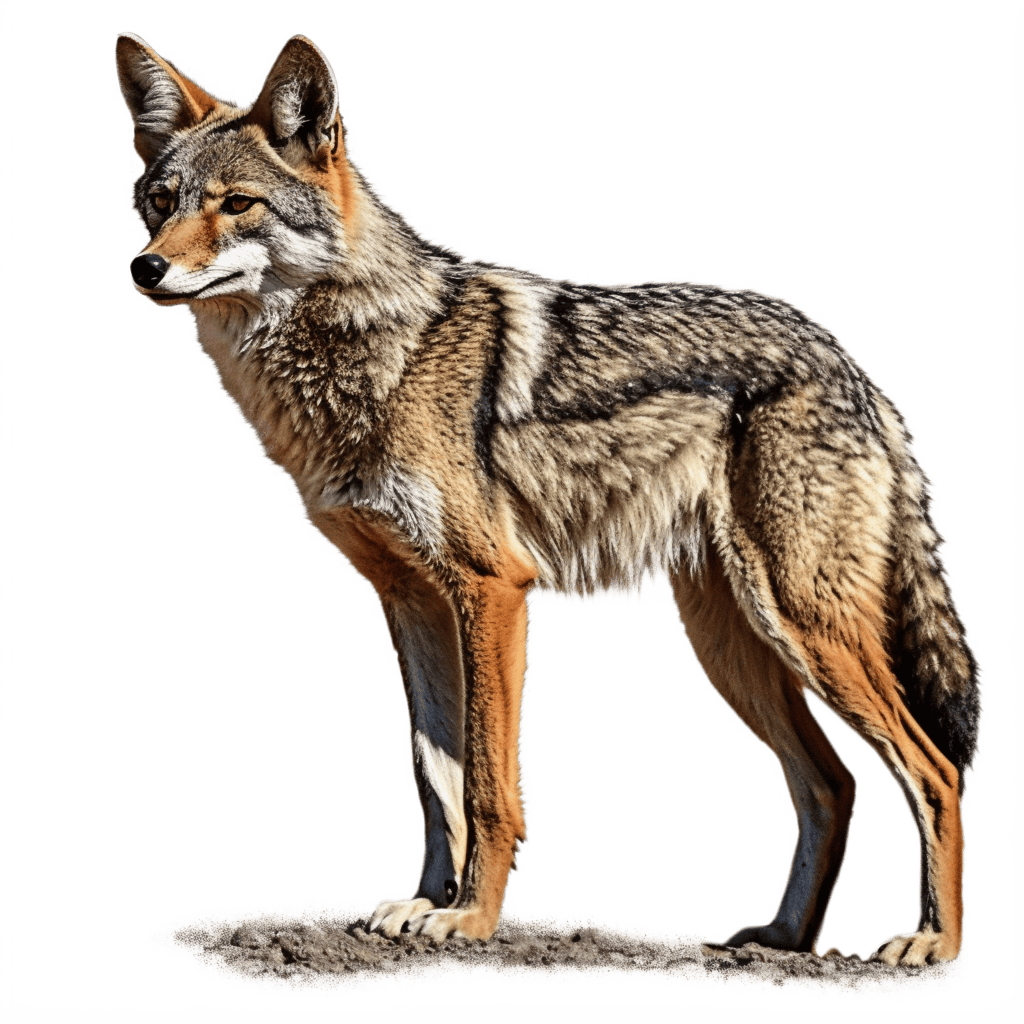
Jackals are medium-sized wild canids belonging to the genus *Canis* and closely related to wolves, dogs, and coyotes. Three primary species exist: the **golden jackal** (*Canis aureus*), the **side-striped jackal** (*Canis adustus*), and the **black-backed jackal** (*Canis mesomelas*). A single animal is called a **jackal**, while a group is typically referred to as a **pack** or **clan**, though they are often seen alone or in pairs. The male is known as a **dog**, the female as a **bitch**—terms used across canid species—and their young are called **pups**. Jackals are slender, fox-like animals with bushy tails, pointed muzzles, large ears, and long legs built for endurance running. Their coats vary by species: golden jackals have tawny gold fur, black-backed jackals feature a distinctive silvery-black saddle across the back, and side-striped jackals have a pale stripe bordered by black along their flanks. They are omnivorous, highly adaptable scavengers and hunters, feeding on small mammals, birds, insects, fruits, and carrion. Known for their intelligence and vocal nature, jackals communicate through yelps, growls, and high-pitched calls, especially at dawn and dusk.
Jackals inhabit a wide range of environments across Africa, southeastern Europe, the Middle East, and parts of South Asia. The golden jackal has the broadest distribution, found from the Balkans through Turkey and India to Southeast Asia, thriving in grasslands, scrublands, woodlands, and even agricultural and suburban areas. The black-backed and side-striped jackals are native to sub-Saharan Africa, preferring savannas, open woodlands, and semi-arid regions. Black-backed jackals are particularly common in southern and eastern Africa, where they are often seen near roadsides or following large predators to scavenge leftovers. Each species has recognized **subspecies** adapted to regional conditions—for example, *Canis aureus moreoticus* in southeastern Europe and *Canis aureus indicus* in India. These subspecies differ slightly in size, coloration, and skull structure, reflecting local environmental pressures. While not domesticated or bred into varieties like dogs, jackals play a key role in their ecosystems due to their flexibility in diet and habitat use.
Culturally, jackals hold a complex and often contradictory place in human traditions. In ancient Egyptian mythology, the god Anubis was depicted with a jackal head, symbolizing protection, embalming, and the afterlife—a reflection of the animal’s presence around burial grounds. In African folklore, the jackal is frequently portrayed as a clever trickster who uses wit to survive against stronger foes, similar to the fox in European tales. However, in many modern contexts, jackals are viewed negatively—as pests that threaten livestock or spread disease. Despite this, they play a vital ecological role as nature’s clean-up crew. By consuming carrion, they help prevent the spread of rotting matter and reduce disease transmission. As opportunistic predators, they regulate populations of rodents, insects, and small vertebrates. They also act as seed dispersers through their droppings, aiding plant regeneration. Though not currently endangered, some jackal populations face threats from habitat loss, poisoning, and persecution. The golden jackal, in particular, is expanding its range into Europe, likely due to climate change and land-use shifts. Revered in myth and misunderstood in modern times, jackals remain resilient survivors—quietly maintaining balance in the wild landscapes they call home.
We keep adding images as will as print-on-demand products of jackals as time goes on. The easiest way to keep up-to-date is to subscribe to our newsletter.
If you would like them applied to a particular kind of clothing item which is missing, then please contact us!
Simba Stickers Canine Facts Videos in English
For facts about canines presented in a fun and informative way, kindly have a look at our videos below!
Video Shorts
Regular Videos
We also have canine videos available in French (regular/shorts), German (regular/shorts), Italian (regular/shorts) and Latin (regular/shorts).
Go to the Simba Stickers English channel for all our videos!
Jackal Products - digital/print-on-demand

Subscribe to our newsletter
Get the latest news and updates straight to your inbox