
Marabou Stork/Marabou Storks
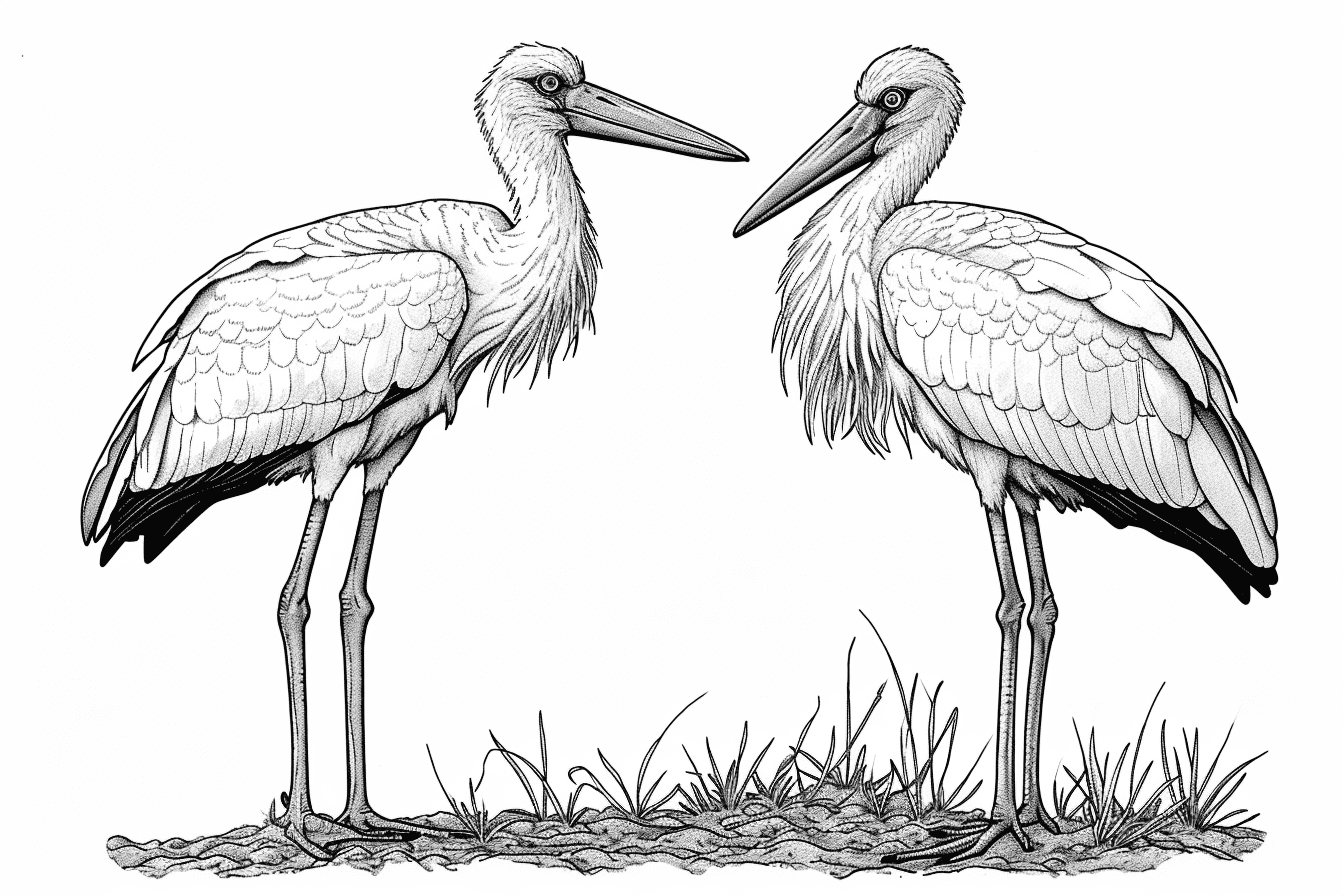
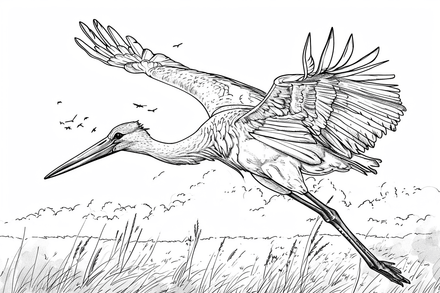
The marabou stork (*Leptoptilos crumenifer*) is a large wading bird native to sub-Saharan Africa and one of the most distinctive scavengers in the avian world. A single individual is called a **marabou stork**, while a group can be referred to as a **colony**, **flight**, or **phalanx** of storks—terms often used when they gather at feeding sites or nesting trees. Male and female marabou storks look nearly identical and do not have separate common names; both are simply called marabou storks, though biologically identified by sex. The young are known as **chicks**, and they hatch in large stick nests built high in trees, where they remain dependent on their parents for several months. This bird is unmistakable due to its massive size—standing up to 5 feet (1.5 meters) tall with a wingspan reaching 10 feet (3 meters)—making it one of the largest flying birds. It has a featherless, pinkish-gray head and neck, a long, thick yellow bill adapted for tearing flesh, and a prominent inflatable throat sac used in courtship displays. Its back bears a ruff of white downy feathers, and it walks with a slow, deliberate gait. Despite its ungainly appearance, the marabou is an efficient glider, using thermals to soar over vast distances in search of food.
Marabou storks inhabit a variety of open environments across sub-Saharan Africa, including savannas, grasslands, wetlands, riverbanks, and urban areas near landfills and slaughterhouses. They are highly adaptable and often thrive in human-altered landscapes where food waste and carrion are abundant. While primarily associated with dry regions, they rely on access to water for drinking and bathing. Unlike many birds, marabous are not migratory but may move locally in response to rainfall and food availability. There are no recognized subspecies or domesticated breeds of marabou storks, as they are wild and not selectively bred. However, populations across East Africa (e.g., Kenya, Uganda, Tanzania) and West Africa show minor variations in size and plumage tone, likely due to environmental factors. These birds are opportunistic feeders, consuming everything from fish and amphibians to insects, small mammals, and especially carrion. They frequently follow vultures to carcasses and will scavenge alongside them, though they lack a strong sense of smell and rely on sight—often stealing food or waiting for larger predators to finish feeding.
Culturally, the marabou stork holds a mixed reputation. Often nicknamed “undertaker birds” due to their dark, cloak-like wings and bald heads, they are seen as eerie or unclean in some communities. Yet, they play a vital ecological role as nature’s clean-up crew. By consuming rotting meat and organic waste, they help prevent the spread of diseases such as anthrax and botulism, contributing significantly to public health and ecosystem hygiene. Their presence around cities and dumps reduces the accumulation of refuse that could otherwise attract rats and feral dogs. In some African traditions, they are respected for their utility, even if not revered like eagles or cranes. Ecologically, marabou storks are keystone scavengers, filling a niche similar to vultures. However, unlike vultures, they are not declining dramatically—thanks in part to their adaptability to human environments. Still, habitat degradation, pollution, and persecution pose potential threats. Though not endangered, their long-term survival depends on sustainable waste management and conservation awareness. More than just scavengers, marabou storks are quiet guardians of ecological balance—ugly to some, yet essential to the health of African landscapes.
We keep adding images as will as print-on-demand products of marabou stork s as time goes on. The easiest way to keep up-to-date is to subscribe to our newsletter.
If you would like them applied to a particular kind of clothing item which is missing, then please contact us!
Simba Stickers Wild Bird Facts Videos in English
For facts about wild birds presented in a fun and informative way, kindly have a look at our videos below!
Video Shorts
Regular Videos
We also have wild bird videos available in French (regular/shorts), German (regular/shorts), Italian (regular/shorts) and Latin (regular/shorts).
Go to the Simba Stickers English channel for all our videos!
Eagle Products - digital/print-on-demand
Subscribe to our newsletter
Get the latest news and updates straight to your inbox